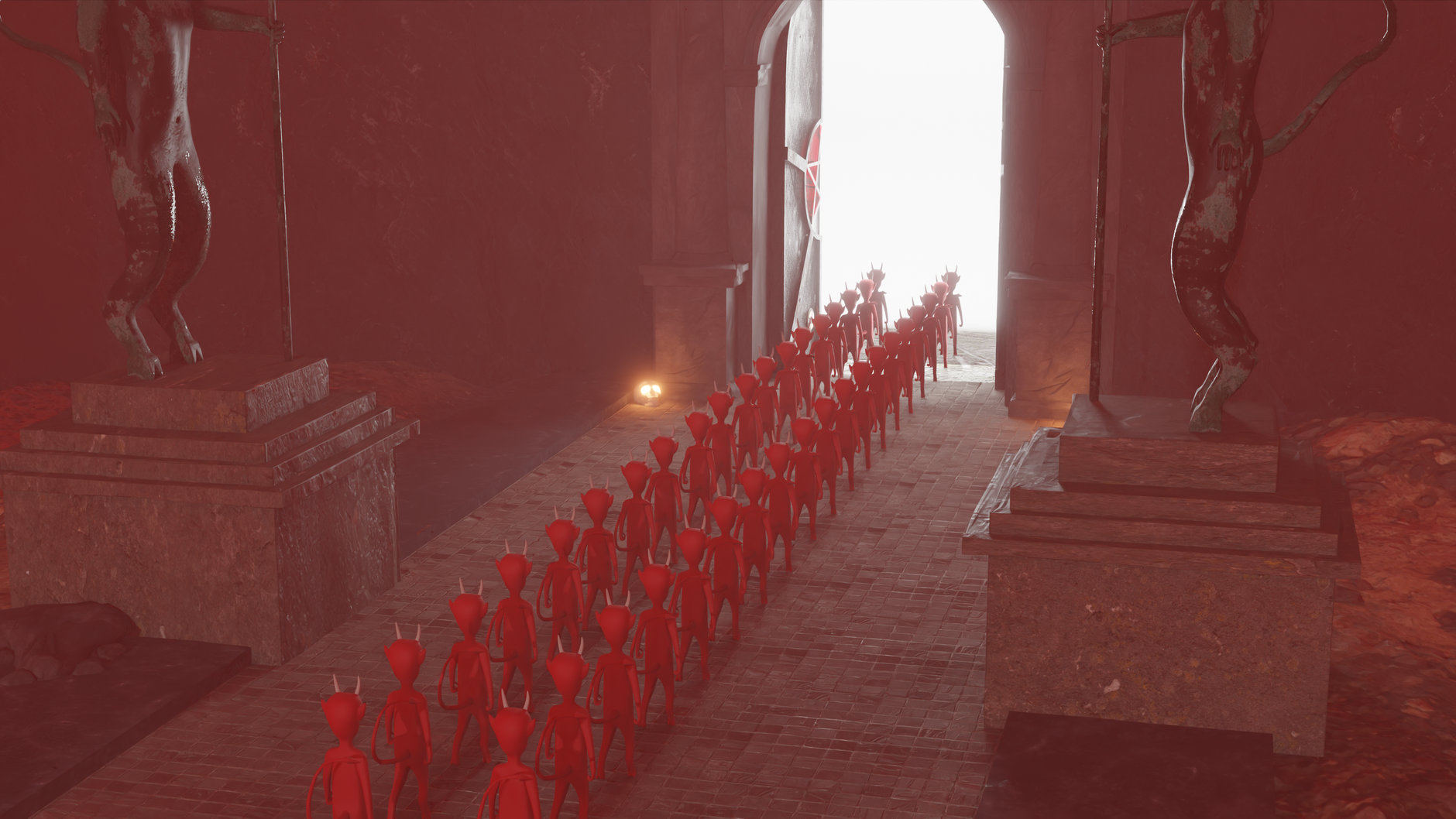
Does Satan Still Have Access to Heaven? Why Does God Allow It?
Satan no longer has unrestricted access to heaven, as his standing as the accuser was decisively ended by the finished work of Jesus Christ. While older biblical narratives depict him appearing before the throne to challenge humanity, the New Testament confirms his casting down and the total victory of the cross.
- The Bible records 3 distinct phases of Satan’s limited access to the heavenly realms.
- Revelation 12:9 explicitly marks the point where he was permanently cast out to the earth.
- Jesus declared in Luke 10:18 that he saw the adversary fall like lightning from the sky.
- Believers now possess a standing in heaven through Christ that Satan can never bridge or revoke.
In twenty years of deliverance ministry, I have sat across from many who fear that their past sins are being cataloged by the enemy before God’s throne. It is a terrifying thought, but it is not the reality of the New Covenant. That fear stems from a misunderstanding of how the courts of heaven operate now that the perfect sacrifice has been offered.
Does the Bible suggest Satan historically had access to heaven?
Scripture records early instances where Satan appeared before God to challenge Job and Joshua, acting as a legal adversary against the saints.
What does the Book of Job reveal about this access?
Job 1:6–12 depicts Satan entering the presence of God along with the sons of God to challenge the integrity of a righteous man under the law.
The account in Job is often cited as proof of Satan’s heavenly standing. He appears to present himself before the Lord, specifically to highlight the perceived weaknesses in Job’s devotion.
Many respected Bible scholars note that this was not a place of permanent residence for the enemy. It was a formal, legal audience regarding his work on earth. He was functioning as a prosecuting attorney, though one motivated by malice rather than justice.
How is this “accuser” role described in Zechariah 3?
Zechariah 3:1 shows the enemy standing at the right hand of Joshua the high priest to accuse him, proving the adversary’s past legal claim.
In this vision, the enemy is actively seeking to disqualify a spiritual leader. This confirms that before the Cross, the enemy held a legal right to bring charges against humanity based on the broken law.
Because the law was broken, the accusations were technically valid. The adversary was using the requirements of holiness to demand the destruction of God’s people.
How did the death and resurrection of Jesus change this access?
The cross replaced the legal accusation of the enemy with the perfect righteousness of Christ, rendering the adversary’s charges powerless.
What happened when Jesus finished his work on the cross?
Christ’s death satisfied the demands of the law, meaning the accuser has no remaining legal basis to stand before God and condemn believers.
Once the debt of sin was paid, the ground shifted entirely. The authority in Christ we possess is not based on our own performance, but on his finished work.
- The legal record against us was nailed to the cross (Colossians 2:14).
- There is no longer any condemnation for those who are in Christ (Romans 8:1).
- The enemy lost his only legal weapon: the valid accusation of our sin.
When did the final expulsion from heaven occur?
Revelation 12:7–9 describes a decisive war in the heavenly realms that resulted in the permanent expulsion of the enemy to the earthly realm.
This passage signals the end of the enemy’s access to the celestial council. It describes a war fought by Michael and his angels that concluded with the adversary being thrown down.
Many in the deliverance-ministry tradition view this as the spiritual fallout of the ascension of Christ. The victory was secured at Calvary, and the enforcement followed in the heavens.
Why do Christians still experience spiritual opposition today?
While the enemy is cast out of heaven, he remains the god of this age and continues to operate through influence and deception on the earth.
Is he currently “loose” or “bound” in his activity?
The enemy is restricted from heavenly accusation but remains active on earth, seeking to devour and deceive those who lack spiritual vigilance.
We must distinguish between his standing before God and his activity among humans. He is no longer a prosecutor in heaven, but he is still a prowling lion on earth.
Understanding this helps us focus on spiritual warfare that is grounded in our victory, not in our fear. We do not fight to win; we fight from the victory already won.
How should we respond to the “accuser of the brethren” now?
Since he can no longer go to God with accusations, he now whispers those lies to our minds, which we must counter with the truth of scripture.
If you feel constant condemnation, realize it is no longer an official heavenly report. It is a tactical deception designed to keep you from using your armor of God.
- Reject the whisper of shame as invalid legal testimony.
- Stand on the fact that Christ is your advocate (1 John 2:1).
- Walk in the confidence that the accuser has been evicted.
Frequently Asked Questions
Common inquiries regarding the adversary’s status in heaven, the nature of his fall, and the implications for our own spiritual security.
Does God speak with Satan today?
There is no biblical evidence that God grants the adversary an audience to discuss humanity in the New Covenant era of grace and redemption.
Was Satan an angel who fell from heaven?
Scripture indicates he was an exalted created being who fell due to pride, losing his position of holiness before his final expulsion later.
Why was he allowed in heaven in the Old Testament?
He appeared as a legal entity to hold humanity accountable to the law until the ultimate sacrifice of Christ could remove that legal basis.
Is Satan currently roaming the earth?
Yes, Peter describes him as a prowling lion who seeks to influence systems and individuals despite his lost standing before the heavenly throne.
Can I be attacked by Satan if I am saved?
Believers face oppression and temptation, but they are never subject to the legal condemnation that the enemy once brought before the throne.
What is the “war in heaven” in Revelation 12?
It represents the spiritual consequences of Christ’s resurrection, where the enemy’s legal standing was revoked and his access permanently barred.
Does the enemy have power over my future?
No, because Christ holds the keys of death and Hades; the adversary’s power is limited to deception and harassment, not sovereign control.
What does it mean that he is the “accuser”?
It refers to his historical legal function of bringing valid charges against humans based on their failure to perfectly keep God’s holy law.
Are demons also barred from heaven?
The defeat of the adversary encompasses his hierarchy, meaning his influence is now restricted to the earthly and atmospheric realms alone.
How do I stop listening to his accusations?
You must replace his lies with the Word of God, specifically reminding yourself that you are covered by the blood of the Lamb daily.
The enemy is a defeated foe who has been evicted from the highest court. Your life is no longer a case file open for review; it is a testament to the grace of the Savior who shut that case forever. Stand firm in that truth. — Pastor David Mercer.